
Design to Build (D2B): Turning ERP Vision into Operational Reality
Design to Build (D2B) is the phase where ERP intentions are tested against reality. It is the moment when conceptual decisions leave the whiteboard and become tangible system configurations, integrations, and workflows. While strategy and vision are essential, D2B is where credibility is earned. A well-executed design that cannot be built efficiently offers little value to the organization.
At its core, D2B ensures that what was designed truly fits the way the business operates—today and in the future. It bridges functional understanding with technical execution, aligning business processes, system architecture, and data structures into a cohesive solution.
During this phase, assumptions are challenged. Functional requirements are validated against platform capabilities, and gaps are surfaced early, when they are still manageable. This is where trade-offs must be made thoughtfully, balancing standard functionality with necessary customization, always with long-term sustainability in mind.
D2B also plays a critical role in risk management. Poorly governed build activities can introduce inconsistencies, technical debt, and rework that surface later during testing or, worse, after go-live. Strong design governance, clear documentation, and disciplined change control protect the integrity of the solution and keep the project aligned with its original objectives.
Equally important is collaboration. D2B succeeds when functional leads, technical teams, and business stakeholders work as one. Clear communication ensures that configurations reflect real operational needs, not theoretical processes. This collaboration reduces friction during testing and accelerates user adoption, as stakeholders recognize their business reflected in the system.
A mature Design to Build approach also considers what comes next. Decisions made here affect data migration, testing efficiency, training effectiveness, and post-go-live support. When D2B is executed with foresight, downstream phases become smoother, more predictable, and far less costly.
In the end, Design to Build is not just about building an ERP system—it is about building confidence. Confidence that the system will perform as expected, support the organization’s goals, and adapt as the business evolves. When done well, D2B transforms ERP from a technical implementation into a reliable operational foundation.
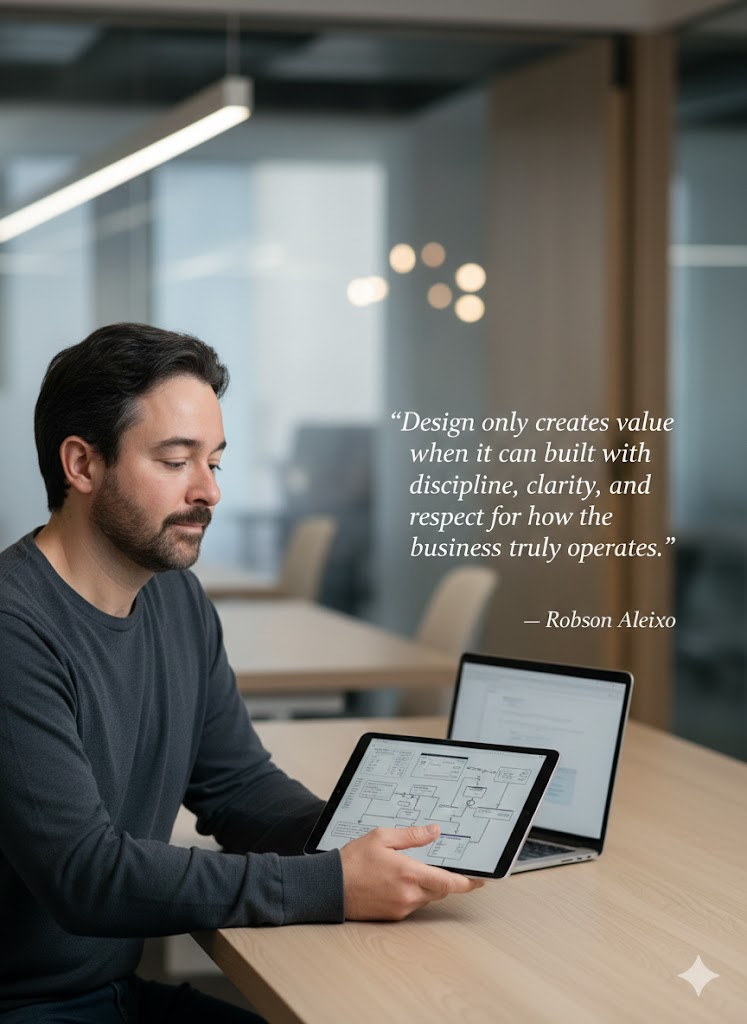
“Design only creates value when it can be built with discipline, clarity, and respect for how the business truly operates.”
— Robson Aleixo
By Robson Aleixo


