
Procure to Pay (P2P): Bringing Control and Clarity to Organizational Spending
The Procure to Pay (P2P) process governs how an organization requests, purchases, receives, and pays for goods and services. While it is often viewed as a transactional function, P2P plays a critical role in financial control, operational efficiency, and supplier relationships. When designed well, it creates visibility and discipline across spending. When it is not, costs rise quietly and controls weaken.
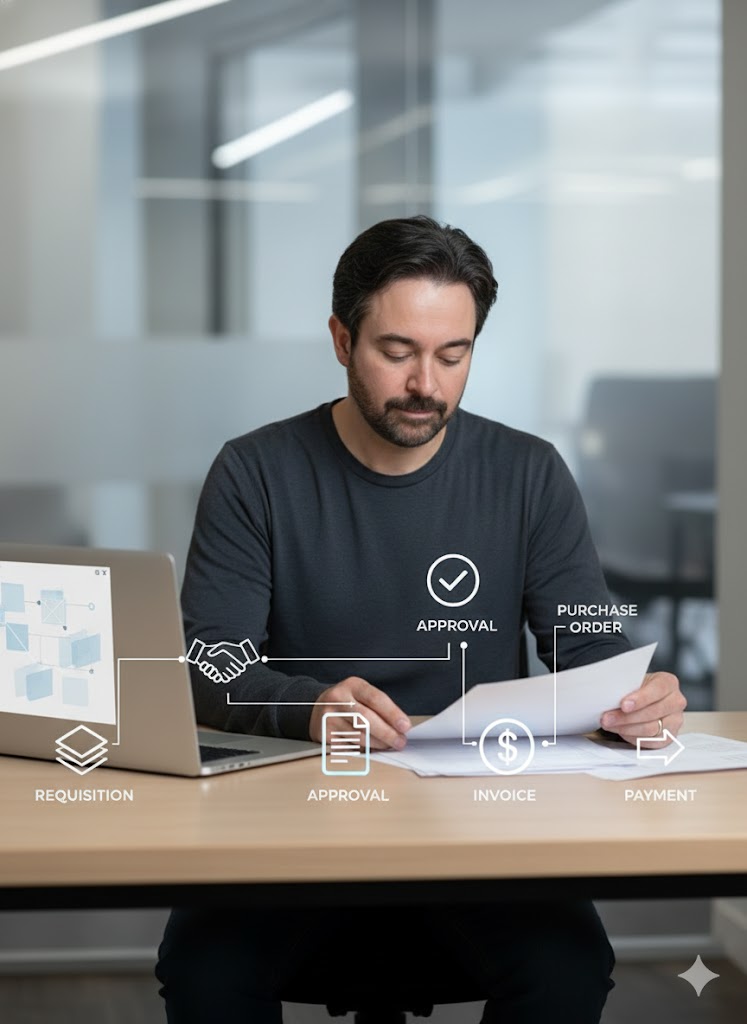
P2P begins with a purchasing need and ends with payment to a vendor. Between those two points sit approvals, purchase orders, receiving, invoice processing, and reconciliation. Each step introduces an opportunity either to strengthen control or to create friction. Many organizations struggle because these steps are fragmented across systems, teams, or manual workarounds.
Why P2P Is a Strategic Finance Process
Uncontrolled or poorly governed purchasing is one of the fastest ways for costs to drift. Without clear approval structures and reliable data, organizations lose visibility into what is being purchased, by whom, and at what price. This makes budgeting harder, weakens vendor negotiations, and increases audit risk.
A mature P2P process provides consistency and accountability. It ensures that purchases are authorized before commitments are made, that goods and services are properly received, and that invoices are paid accurately and on time. Just as importantly, it creates data that finance and leadership can use to understand spending patterns and identify opportunities for improvement.
Common P2P Pain Points
Many organizations face similar challenges within Procure to Pay. Requisitions are bypassed, purchase orders are created after the fact, and invoices arrive with missing or incorrect information. Manual invoice processing slows down payments and increases the risk of errors, while unclear roles make it difficult to enforce accountability.
These issues often surface more clearly during ERP implementations, when legacy habits collide with standardized system workflows. Without careful process design, the ERP can expose gaps rather than resolve them.
P2P in an ERP Environment
An ERP system can significantly strengthen Procure to Pay, but only when process and system design are aligned. Approval hierarchies, vendor master data, three-way matching rules, and receiving processes must reflect how the organization actually operates while still enforcing necessary controls.
Successful P2P implementations focus on simplifying requisitions, standardizing purchasing behavior, and automating invoice matching wherever possible. This reduces manual intervention, shortens cycle times, and improves both compliance and vendor satisfaction.
How Robson Aleixo Consulting Supports P2P
Procure to Pay is approached as a balance between control and usability. The objective is not to slow the business down, but to create a process that is easy to follow and difficult to bypass.
Support typically includes P2P process assessment, ERP configuration aligned with approval and control requirements, vendor and purchasing data design, and invoice-to-payment optimization. The result is a P2P process that finance can rely on and operations can work with.
“Procure to Pay is where financial discipline meets everyday decision-making. When the process is clear and controlled, organizations don’t just manage spending—they understand it.”
— Robson Aleixo
Turning Spend into Insight
When Procure to Pay is functioning effectively, organizations gain more than operational efficiency. They gain visibility into spending, stronger supplier relationships, and greater confidence in financial results. Finance teams spend less time chasing invoices and correcting errors, and more time supporting planning and decision-making.
Procure to Pay is not just about paying vendors—it is about governing how the organization commits and manages its resources.
By Robson Aleixo


